

Visit Our Sister Company
When teams evaluate security guard services, they often hear broad promises about real-time monitoring with little proof behind them. In many sales conversations, “real-time monitoring” means little more than “our guards use an app.”
That still doesn’t tell a buyer whether posts were covered, whether rounds were completed, whether incidents were documented correctly, or whether anyone can reconstruct what happened after the fact. That gap is the real issue.
A guard check-in app is the field tool a guard uses to confirm arrival, presence at checkpoints, or patrol activity during a shift. Security guard monitoring software is the broader system that collects those records, timestamps them, routes alerts, and gives supervisors or clients a way to review them. A vendor can have the first without having the second in any serious sense.
Most enterprise buyers hear the same claims: GPS visibility, live reporting, instant alerts, and full transparency. Those claims only matter if they create proof that someone can actually utilize.
A credible setup should show when a guard arrived, whether required rounds were completed, what happened during the shift, and how quickly unusual activity moved from field observation to management awareness. That is very different from simply saying a guard clocked in on a phone.
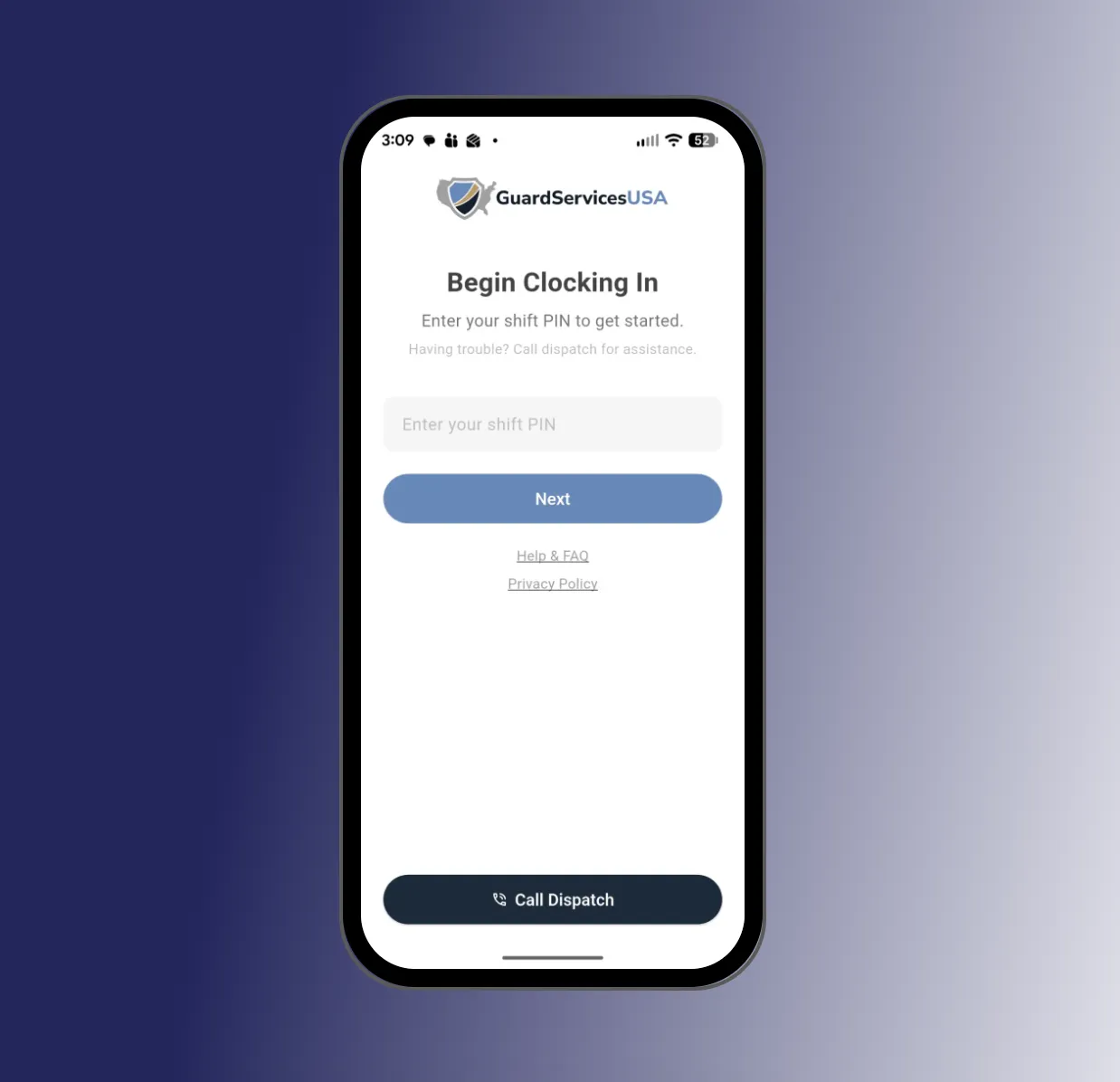
A guard check-in app is only one operational component, not the full monitoring program. It is a field-use tool that supports the larger system around it.
At a minimum, it should let a guard confirm arrival, record movement through required checkpoints, note exceptions, and submit time-stamped updates from the post. In a stronger setup, that check-in is supported by GPS location data, post-specific prompts, photo verification, or the completion of required tasks.
That distinction matters because a digital check-in alone does not prove much. It may show that someone tapped a screen, however it doesn’t necessarily show that the right guard was at the right place, completed the right round, or escalated the right issue.
A real-time monitoring system should create a useful operational record of events and activity throughout the shift, not just serve as an upgraded timesheet.
In most cases, that should include:
That list is useful because it turns a vague technology claim into a set of things a buyer can actually ask to see.

A good dashboard should answer operational questions quickly. It shouldn’t force the client to interpret raw activity data and guess whether coverage is actually happening.
At a minimum, a buyer should be able to see whether the assigned guard arrived, whether required rounds were completed, whether incidents were logged in real time, and whether missed activity or late activity triggered review. The stronger question is not “Do you have a dashboard?” It’s “What can I confirm from it in under two minutes?”
If the dashboard looks polished but cannot answer basic questions about post coverage, patrol completion, exceptions, and escalation timing, then it is not a transparency layer, it’s a presentation layer.
When guard monitoring programs are weak, the same problems tend to surface. A check-in may be recorded without proving that the guard was actually at the post, or the software may do little more than track attendance. Incident reports may be logged too slowly or without the detail needed for analysis, escalation, or later scrutiny.
Training is another fault line to keep in mind. A vendor may buy decent software and still get weak results if guards aren’t trained to use it consistently under live conditions.
That’s why the best programs don’t treat monitoring as passive surveillance; they treat it as accountability support. Good guards usually accept tools that prove work has been completed, document issues clearly, and enable faster escalation when something goes wrong.
The usefulness of monitoring does not end once the shift is over; in many cases, it matters even more when an incident, dispute, or failure needs to be reviewed.
A real-time system should create a chain that starts with what the guard saw, continues through when it was logged, shows who was notified, and preserves what happened next. That record matters when managers review performance, when a client needs to understand timeline gaps, and when outside parties ask what was known and when it was known.
Vague tech wording tends to collapse at exactly this stage, when general claims have to stand up to specifics. Buyers are not paying for “visibility,” they’re paying for a record that holds up under real scrutiny.
Any discussion of real-time security guard monitoring technology that enterprise buyers can trust should end with a screening tool, not a slogan. When evaluating potential options, buyers should ask:
Those questions work because they force a vendor to explain proof, not posture. Any guard services company that cannot answer these three questions clearly either does not have the technology or has not invested in training guards to use it. Both are disqualifying for enterprise clients managing multi-location portfolios.