


Visit Our Sister Company
855-843-4300
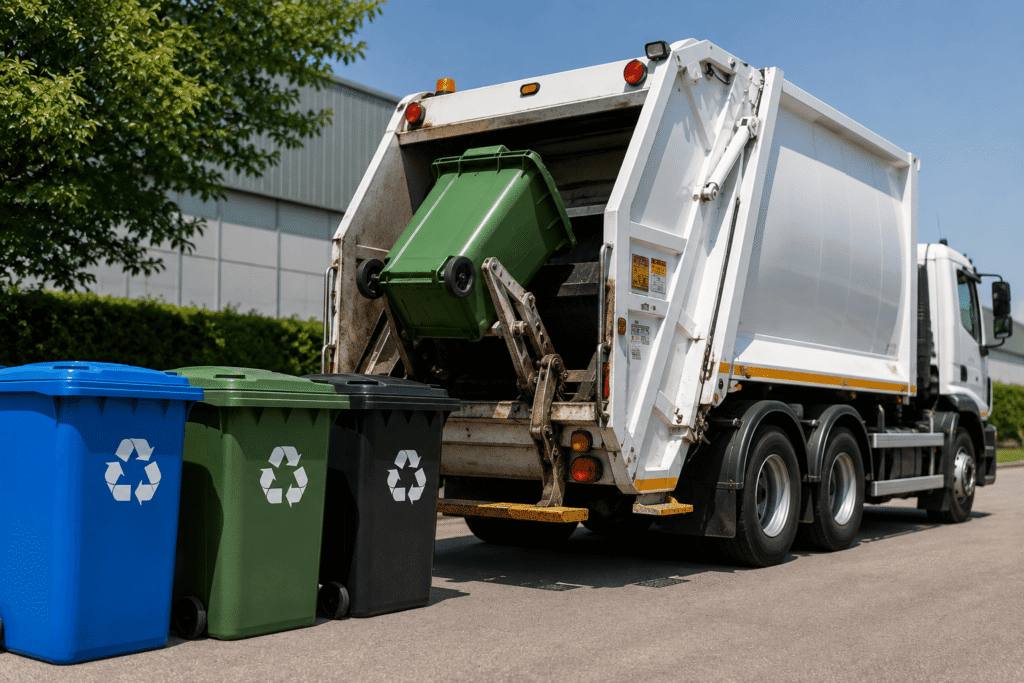
Commercial recycling compliance means a business separates, collects, documents and disposes of waste streams in accordance with the rules that apply to each location. For multi-location retail, grocery, QSR, and commercial real estate portfolios, that can include local hauling rules, state recycling mandates, organics diversion requirements and special disposal obligations.
That is why commercial waste removal and recycling compliance is more than a hauling decision. One store may only need the right container and pickup schedule. A 50-location portfolio needs visibility into vendor performance, invoice accuracy, recycling status, missed pickups and overflow before they become customer-facing problems.
The risk is both operational and environmental. Poor coordination can create service failures, avoidable fees, tenant complaints, and reporting gaps across operations, finance, sustainability and legal teams.
Commercial waste disposal is regulated through several layers of authority, with federal, state and local requirements often applying at the same time.
Municipalities may control setout times, container placement, material separation and hauler requirements. State regulations can add another layer of requirements, including recycling mandates, organics diversion programs and bans on disposing of certain materials. Federal rules may apply when a location handles certain hazardous or universal waste streams.
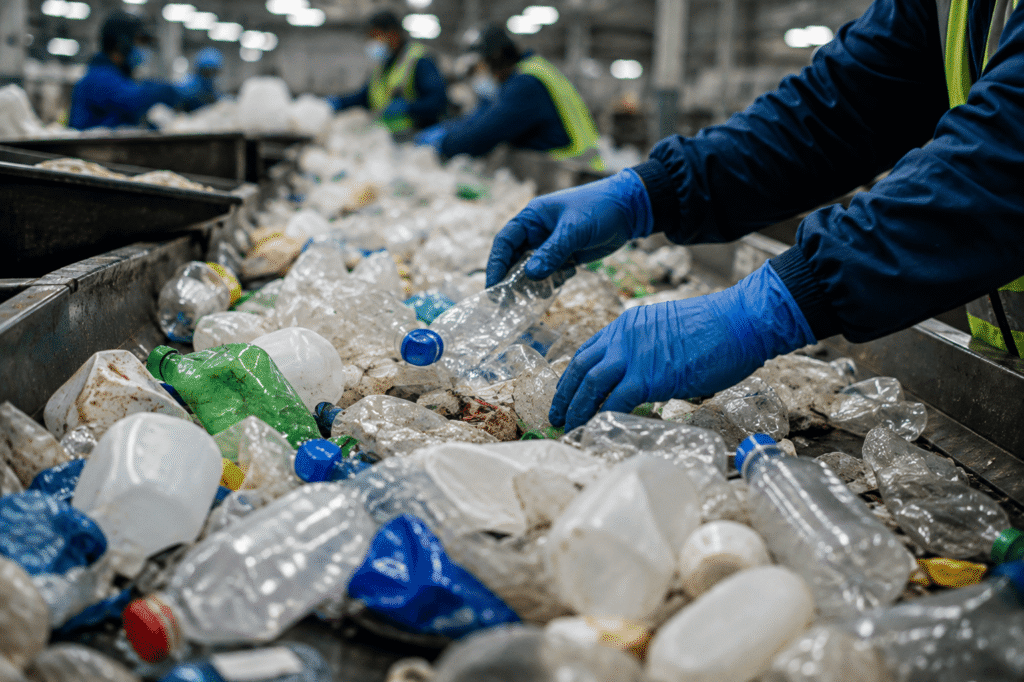
That variance matters for restaurants and food service portfolios because two locations with the same brand standard may still have different obligations. A grocery store in California, a food-service location in New York State and a shopping center tenant in Massachusetts may each need different signage, container setups and documentation.
A compliant program separates law from hauler preference, lease obligation, sustainability target and best practice. When those categories blur, operators can overpay for unnecessary service or under-document requirements that matter during an inspection.
Several states are especially important for enterprise operators because their rules create direct location-level obligations.
California’s mandatory commercial recycling program applies to businesses that generate 4 cubic yards or more of commercial solid waste per week and requires them to arrange for recycling services.
New York’s Food Donation and Food Scraps Recycling Law currently applies to large generators and is scheduled to expand to lower weekly food-waste thresholds in 2027 and 2029. Massachusetts’ commercial organics waste ban applies to businesses and institutions generating one-half ton or more of food waste per week.
Washington’s organics management law is phasing in business collection requirements, with designated-area thresholds tightening to 96 gallons per week when fully implemented in 2026.
For multi-location operators, the direct answer is this: commercial recycling requirements depend on the state, municipality, waste stream, generation threshold, and whether the location is covered by organics, recycling, hazardous waste or special disposal rules.
Fragmented waste management usually starts as a local convenience. One market uses one hauler, another market uses a different recycler and a third location inherits whatever vendor came with the lease or prior property manager. That can work until the portfolio grows.
Once operations teams are managing 15 or more vendor relationships, the hidden cost is not just the monthly invoice. It’s the time spent comparing rates, resolving missed pickups, checking container sizes, chasing credits, confirming recycling service and reconciling different billing formats.
Fragmentation also weakens compliance visibility. If each market documents recycling differently, leadership may not know which sites have current service, which sites need organics diversion, which invoices include contamination fees or which locations have recurring overflow.
A coordinated national waste removal program gives operators a single operating view without pretending every location needs the same setup. Standardization should apply to process, documentation, escalation, and reporting. Service levels still need to match actual waste volume, store format, market rules and pickup access.
The core pieces are standardized service cadences, centralized billing, location-level compliance documentation, clear escalation paths for missed pickups and a process for right-sizing containers when volume changes.
Cost control comes from the same discipline: volume contracts, fewer billing discrepancies, fewer emergency pickups and less over-service from containers or schedules that no longer match actual use.
Special waste streams need their own controls. The EPA identifies five federal universal waste categories: batteries, pesticides, mercury-containing equipment, lamps and aerosol cans.
The goal is to see where money is going, where service is failing and where compliance exposure exists before it becomes a municipal notice, landlord dispute or brand issue.
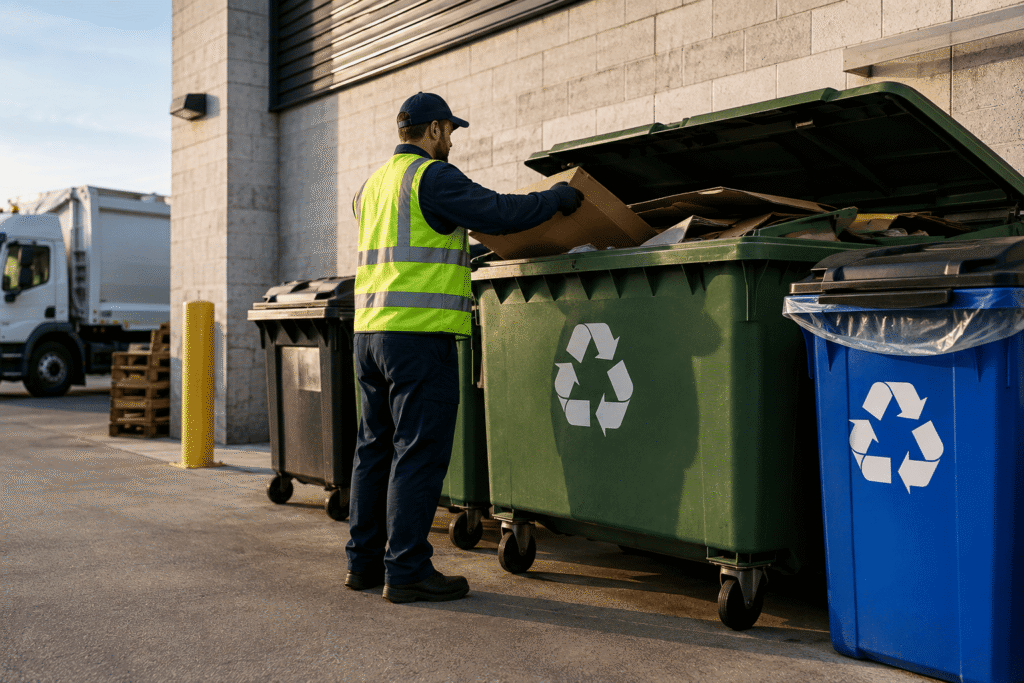
At Facilities USA, We understand that every client and property has unique needs. Our approach is built around providing personalized security solutions that are designed to ensure maximum protection, reliability, and peace of mind. Here’s how we work.
Which locations are subject to state, municipal, organics, recycling or special disposal requirements that are not reflected in the current contract?
Can the vendor provide location-level documentation for service cadence, missed pickups, contamination issues, overflow events, recycling service and billing adjustments?
Has each location’s container size, pickup frequency, and recycling setup been reviewed against actual volume and current compliance obligations within the past year?
Before renewing commercial waste removal contracts across a portfolio, operations leaders should map each location’s current vendor, service cadence, recycling compliance status, special disposal needs, escalation history and total cost.
A waste audit often reveals opportunities to consolidate services, reduce inefficiencies and address compliance issues before a local inspection creates additional pressure.
The strongest waste programs are built around visibility. When operators can see service, cost, and compliance by location waste removal becomes easier to manage as a portfolio-wide system rather than a recurring local fire drill.