Why AI-Augmented Security
Only Works With Human Oversight
You’ve most likely sat through countless vendor demos promising that AI-powered surveillance alone will solve your security challenges. On paper, the capabilities are compelling, with real-time alerts and visibility across locations. But once those systems are deployed, the question becomes: What happens after an alert is triggered?
AI-augmented security uses artificial intelligence to monitor environments, identify anomalies, and surface potential risks. It is effective at detection, but it is not designed to respond. AI can generate alerts at scale, but without trained guards positioned to interpret and act on them, those alerts rarely translate into meaningful outcomes.
What AI in Commercial Security Actually Does
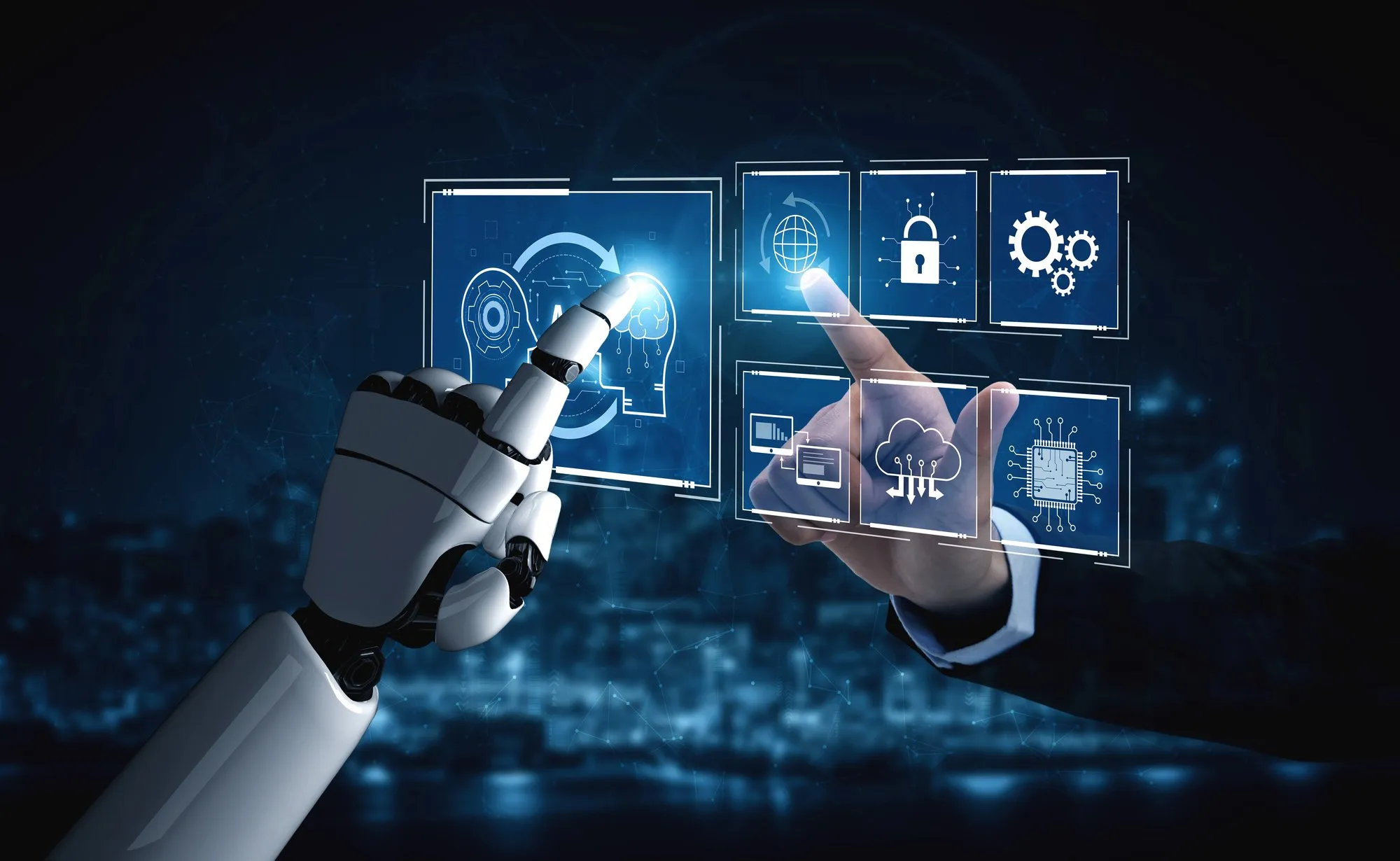
AI in enterprise security is best understood as a detection layer, not a complete solution. Across large portfolios, AI systems monitor environments continuously and flag patterns difficult to catch manually:
Identifying anomalies such as loitering, unusual movement, or after-hours activity
Monitoring multiple camera feeds simultaneously without fatigue
Prioritizing alerts across locations based on predefined risk signals
Highlighting trends over time, such as repeat incidents at specific sites
Generating predictive heat maps that surface high-risk areas and time windows based on historical patterns
Those capabilities have clear limits. AI can flag a situation as unusual. It can’t:
Determine whether behavior is suspicious or situational
Assess risk in real-world context
Intervene, de-escalate, or physically respond
Make judgment calls when situations fall outside predefined patterns
AI can identify potential issues, but it can’t resolve them.
Where Most Security Programs Break Down
Detection without a clear response structure turns security systems into documentation tools rather than deterrence mechanisms. Most AI systems generate a steady stream of alerts across locations. Without clear ownership, the backlog grows. Over time, teams stop chasing signals they don’t have the capacity to act on.
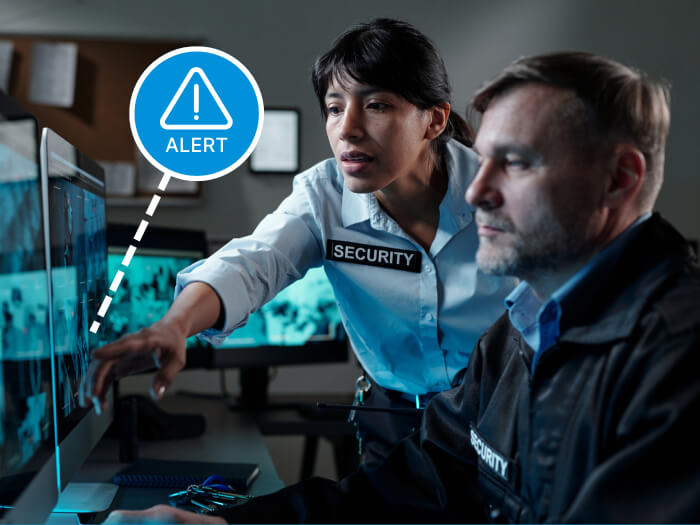
Many programs identify and log events but break down at the point of intervention.
- AI documents incidents after they occur
- No one is positioned to act in real time
- Behavior continues because there is no visible deterrent
The result is a system that captures what happened but does little to change it. These breakdowns are not random. They trace back to consistent structural decisions made during program design.
- Advanced systems are deployed without corresponding staffing
- Alert volume increases without clear escalation paths
- Frontline teams are not equipped to act on what is surfaced
This creates a structural imbalance where visibility improves, but outcomes do not, because no one is in place to act on what the system detects.
Where Human Judgment Remains Irreplaceable
Security outcomes come down to real-time interpretation and action, not just detection. A person lingering near an entrance could be a customer, a vendor, or a potential threat. A raised voice could signal frustration or escalation. AI can flag the behavior. It cannot read the room.
According to ASIS International’s 2025 Threat Intelligence report, major robberies, workplace violence, and physical perimeter breaches rank among the hardest types of incidents to detect in a timely fashion. These are precisely the situations that require human judgment to recognize and act on in real time.
Security decisions are rarely binary. They involve judgment calls around escalation, intervention, and use of force, all of which carry real consequences. That means knowing:
- When to approach versus observe
- When to de-escalate versus escalate
- How to respond without creating additional liability
These calls require experience and accountability, not just a triggered alert. Not every situation fits a script. Trained guards adapt in the moment, reading what is actually happening rather than waiting for a system to tell them what to do.

What Effective AI-Augmented Security Programs Look Like
The strongest programs draw a clear line between what technology does and what people do. AI handles monitoring at scale, identifying anomalies, prioritizing alerts across locations, and flagging patterns that would be difficult to catch manually.
According to ASIS International’s 2025 Security Trends Research, among organizations already using AI in security, 33% report that it has shifted frontline guards away from routine patrolling and toward investigation, response, and management. That is exactly how effective programs are designed to work.
Trained guards handle what comes next, verifying alerts, reading context, and intervening when the situation calls for it. The model only works when guards are trained for it.
In an AI-augmented environment, this means more than standard post orders. Guards need to understand what the system flags and why, recognize the categories of risk it routinely misreads, and know when a situation requires a human call the algorithm was never designed to make. Guards are expected to know the escalation protocols, understand how alerts are prioritized, and recognize where the system falls short.
That training is supported by technology built for field performance, not just dashboard visibility. In effective programs, guards operate with GPS-based patrol tracking to confirm on-site activity, mobile tools for real-time incident reporting, centralized dashboards across locations, and alerts tied to defined response protocols.
The measure of an effective program is not how much it detects. It is how consistently it responds.
5 Questions Enterprise Buyers Should Ask Security Vendors
Enterprise buyers should focus on how technology translates into response.
1. How are guards trained to respond to AI-generated alerts?
Outcomes depend on how alerts are interpreted and acted on in real time.
2. What is the typical response time from alert to intervention?
Speed determines whether an issue is addressed or simply recorded.
3. How is alert volume managed to prevent overload?
Without prioritization, high alert volume leads to missed signals.
4. How are incidents documented and escalated across locations?
Consistency is critical for multi-location operations.
5. Can you provide examples where detection led to measurable outcomes?
Focus on results, not capabilities.
The Bottom Line for Enterprise Security Leaders
AI has changed how security teams detect risk, but not what determines outcomes. Detection creates visibility. Response determines what happens next.
The right question to ask any guard services partner is not what technology they use. It is whether their guards are ready to act when it matters. When that connection is in place, AI becomes a force multiplier, enabling faster decisions, more consistent responses, and stronger outcomes across locations. Most programs that fall short do so not because the technology failed, but because no one was trained to act on what it found.

Frequently Asked Questions: AI-Augmented Security
Can AI replace security guards in enterprise retail environments?
No. AI can improve how security teams monitor environments, but it cannot replace the human judgment required to respond. Detecting a potential threat and acting on it are two different capabilities. In enterprise environments where situations involve real people, legal risk, and unpredictable behavior, the response layer is not optional. Programs that treat AI as a replacement for guards end up with better documentation of incidents, not fewer of them.
What does AI-augmented security actually do in a commercial setting?
AI-augmented security uses machine learning and computer vision to monitor environments continuously, identify anomalies, and surface potential risks across multiple locations simultaneously. It flags unusual behavior, prioritizes alerts, and highlights patterns over time. What it does not do is assess context, make judgment calls, or intervene. It is a detection layer, not a response system.
How do trained security guards and AI technology work together?
AI handles monitoring at scale. Guards handle everything that requires human judgment. In practice, that means AI surfaces alerts and guards verify them, assess the situation, and decide how to respond. The technology improves visibility. The guards determine outcomes. That division only works when guards are trained to interpret what the system surfaces and act on it effectively.
What should enterprise buyers ask about a security company’s technology capabilities?
Focus on response, not features. Ask how guards are trained to act on AI-generated alerts, what the typical time is from alert to intervention, and how alert volume is managed to prevent missed signals. Ask for examples where detection led to a measurable outcome. Technology is easy to demonstrate in a vendor demo. Trained response is what actually determines whether a program works.